Posts

Reflections on the text for Ascension – Acts 1:6-14
Image
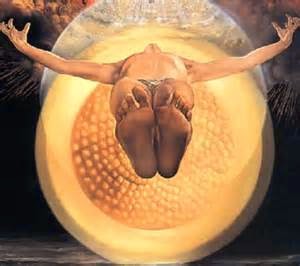
Read the text here: Acts 1:1-14 Endings and Beginnings In the early years of the church through most of history the Feast of the Ascension held as important a place in the lives of worshippers as did Christmas.   In fact, in some ways it was more important.   But falling as it does on the 40 th day after Easter, which is always on a Thursday, means that the day never cycles around to Sunday like most of the rest of our festivals.   So as we have entered into the modern world the Feast of the Ascension has been lost and goes uncelebrated by most Christians, unless it is moved to the 7 th Sunday of Easter. This is a loss because the ancients had it right – Ascension is essential to not only our understanding of our faith, but also to our living as disciples in this world.   For the event of the Ascension is THE pivotal event in the story of Jesus for the church.   For Luke, the author of the Gospel of Luke and the Book of Acts, this story was so i...

Reflections on the text: John 14:15-21

Read the text here: John 14:15-21 Come Along Side Every so often in our reading of the Bible we encounter a word that is central to the understanding of a passage, but at the same time if we look beyond the word itself we usually discover that this particular word is one of those words that the translators found difficult, if not impossible to translate.   Sometimes the word is just left in Greek, and you are on your own; at other times the translators will pick one English word from among multiple possible choices and go with that.   The problem with this is that then how we understand that word is limited by the narrow definition of the chosen English word.   This is the situation we find ourselves in this morning with our Gospel text.   Let’s look at verse 16: And I will ask the Father, and he will give you another Advocate, to be with you forever.   Another Advocate!   Another?   Well, Jesus is the first Advocate (see be...

Reflections on the text – Easter 5A – John 14:1-12

Image
Read the text here: John 14:1-12  On the Way One of my favorite movies is the classic Judy Garland film “The Wizard of Oz.”   I'm sure that I have seen this film at least 20 times, and I'm sure that you have also seen this movie at least once no matter how old you are.   You remember the story: A tornado plops Dorothy down in the middle of a strange place called OZ, and in the process she accidently killed the wicked witch of the east and ends up with the precious ruby slippers for which she is then pursued by the profoundly evil Wicked Witch of the west; her major, most important goal thereafter is that she wants to return home to Kansas, which represents life and happiness to her.   But how?   Maybe the Great Wizard of Oz who lives in the Emerald City would help her (there is, by the way, never any question whether he can or not, only whether he will be willing.)   Well then, what is the way to the Emerald City?   "JUST FOLL...

Reflections on the Text – Easter IVA – John 10:1-10/Acts 2:42-47

Read the John text here:  John 10:1-10 Read the Acts text here: Acts 2:42-47 Abundant Life: Giving It All Away Jesus says, I came that they (You! We!) may have life, and have it abundantly.   Fantastic!   Wonderful!   What good news!   But… what exactly does it mean?   The word “abundant” means to have a lot of something – “like an abundant harvest of grapes.” Or we talk about someone who has lots of things has having an “abundance” of stuff.   But how can you have abundant life?   The prosperity Gospel folks have latched on to this passage and have interpreted it as meaning that Jesus is saying that God wants us to have lots of stuff, material possessions, wealth, money, fancy cars, big houses.   For them that is what “abundant life” is: a life of comfort and ease and wealth.   But it is hard to square that with the picture of Jesus on the cross – naked, tortured, bleeding, stripped of every worldly possessi...

Reflections on Easter - Matthew 28:1-10

Image
Read the text here: Matthew 28:1-10 Resurrection – Surprised by Hope! The title is partly borrowed from N.T. Wright’s incredible book “Surprised by Hope!” Jesus was dead – completely dead!   No question about this.   The Romans had made sure of it before they removed Jesus from the cross and there were witnesses including some of the women and the disciple John to the reality of Jesus’ death.   Joseph of Arimathea also could have seen that Jesus was dead when he had him wrapped in burial clothes and placed in the tomb.   Everyone in the story knew this and this meant some kind of an ending for everyone.   For the Romans and the leaders of the Temple it meant the end of this troublemaker, this messianic pretender; the end of the one who challenged their power and authority and wealth and privilege.   Now these men whose priorities and way of life represent the power of death were free to continue as they had.   Jesus’ death is further c...

A Sermon for Palm/Passion Sunday - April 2014

Image
Read the Procession of Palms text here: Matthew 21:1-11 Read the Passion text here: Matthew 26:14-27:66 Who Is This and What Is Going On Here? Pontius Pilate, Roman Prefect of Judea This weekend we enter into the Passion of our Lord.   This is the most important week of the year for those who are disciples of Jesus.   For the love and commitment of God to the creation and to us, who are God’s beloved children, is put on display in ways that are both profound and overwhelming.   But at the same time it is a bit baffling because throughout his ministry and especially during the story of the passion what emerges as important, and essential for Jesus (and for God) is in direct conflict with those things that we humans have determined are essential and important for us.   This is starkly obvious when the events of the Passion and Jesus’ actions are compared and contrasted with those of various other characters in the story.   So beginning on this...

Reflections on the text - Lent 5A – John 11:1-45

Image
Read the text here: John 11:1-45 Not What I was Expecting! How often do we ask questions where we already know the answer we expect?   I think quite often.   Occasionally someone will call the house and ask if I would like to take a “non-partisan” poll.   Usually I say no, but occasionally I have agreed.   So then the questions start and within the first couple questions you can tell this is not a “non-partisan” poll.   The questions, in fact, are designed to elicit specific answers and there is no space for an alternative perspective.   I know what I want to hear – end of discussion!   It is perhaps one reason why I have no respect for the polls to which everyone on television and in politics is always referring.   But we do the same for faith issues too, don’t we?   How often have you asked a question expecting a certain answer?   How often have you asked a question with the express purpose of making a point?   ...